DHI is proven to reduce hair loss and regrow your hair
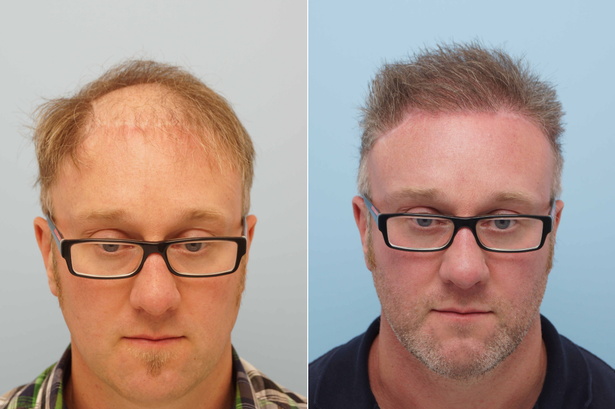
AT HE CLINIC we now have the NEW popular DHI technique
This most advanced method of hair transplant available.
- Are you worried that your hair is falling out?
- Have you lost your hairline or suffering from male pattern baldness?
- If you are one of the many men that have androgenic alopecia or other hair loss issues.
- If you want to look years younger with your hair regrown, then you need DHI Hair Transplant
What is the Difference between DHI and FUE?
During an FUE hair transplant, the surgeon manually extracts each follicle one at a time and places them into a storage solution. Once extraction is complete, the surgeon will open the canals for the grafts to be implanted.
So, what is DHI?
DHI stands for Direct Hair Implantation. This is a relatively new procedure and just like FUE, it leaves no visible scars and results look natural. While the graft extraction process is similar to FUE, there are a few differences worth noting.
The hair follicles are implanted directly into the recipient area using the Choi Implanter Pen. With DHI, no holes or slits are created before the implantation.
Because the DHI method is direct it does not require the channels to be opened beforehand in the area where the hair will be added or for the hair to be kept for up to 2-4 hours before transplant (as with FUE)
Main advantages of the DHI technique are:
- Due to the structure of the Choi pen, hair transplantation can be performed faster.
- Because it’s a direct method there is less damage to the follicles during transplant.
- The healing process is faster and shorter.
- The retention of hair follicles is better.
- Hair follicles start growing faster due to a lack of cell division during transplant.
- No sutures are used, so there are no visible scars.
- There is little damage to the donor area and recovery is faster.
- A more natural look can be achieved.
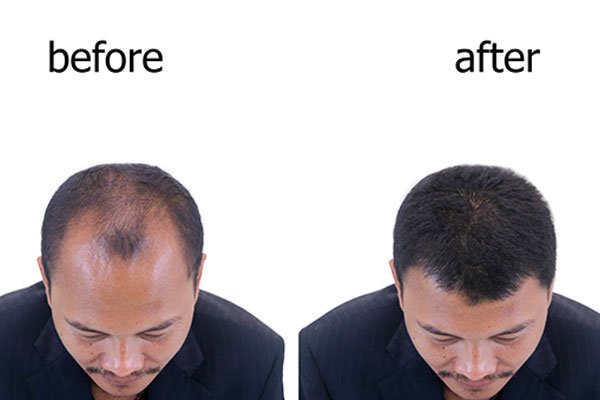
DHI at HE Clinic Bangkok
This is a completely non-invasive treatment No scalpel or sutures are used, no general anaesthesia.
Due to new DHI technology, it is now possible to transplant hair follicles with a guaranteed natural result!
Who is the treatment suitable for?
✅ DHI hair transplantation is suitable for anyone with pattern baldness which has just started or is already advanced.
✅ It is important to understand for the treatment to work their needs to be sufficient donor hairs available. So we will remove follicles from the side and back of the head and transplant to the areas where there is less hair.
✅ To determine whether FUE hair transplant is suitable for you, you can come into the clinic for a free consultation or you can send us pictures of your head from the back front and sides.
The treatment
The graft zone will be shaved, the larger the area to be covered, the larger the area to be shaved will be.
A local anesthetic is applied by the doctor and the removed grafts are then placed immediately at the site of the thinning hair.
The residual holes will close up on their own and leave no visible mark.
This process to add 2,000 + grafts can a full day at the clinic. Our DHI doctor will work thoroughly, delicately and precisely to complete in the fastest possible time.
After the DHI procedure – what to expect
There is very little pain after the procedure except perhaps for a slight prickling sensation.
Swelling is rare but can happen if the hair replacement zone is close to the forehead or temples.
Micro-holes from taking the grafts will heal completely within a few days and new hairs will appear after 8 to 10 days.
The patient will be able to use shampoo after the 3rd day provided he is careful and simply “dabs” the scalp. This will need to be repeated over the next 7 days.
Often the grafts fall out around the 10th day. It is, in fact, the developing cells of the hair bulb that remain grafted and that will produce the new hair.
Towards the end of the first month, some of “your” hairs that are in contact with the grafts may also fall out. It is therefore not unusual for hair growth, in general, to be less during the 2nd month.
Towards the 3rd month, both the grafts (and any hairs that may have fallen when they were in contact with the grafts) will systematically grow back.
Swimming in a pool or in the sea, as well as exposure to the sun is not recommended for at least three weeks following the procedure – this is to avoid disturbing the healing grafts.
The results are amazing!
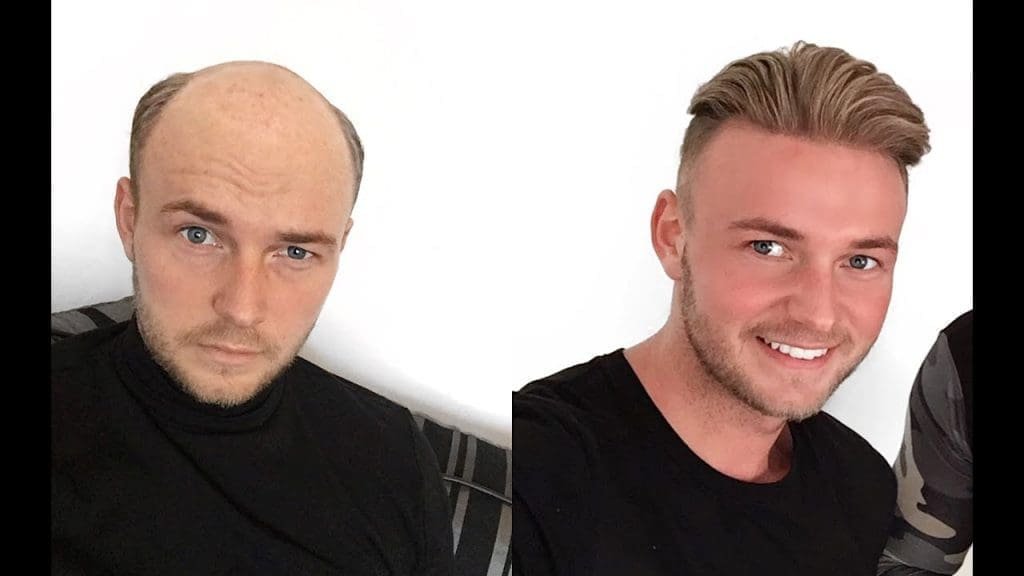
In the majority of cases, results should be visible after 6 months but they may take up to a year.
Using this technique for hair replacement, results are fantastic and the hair should look natural and full.
The DHI procedure cost
A new running promotions!
1,000 grafts just 99,000 THB
2,000 Grafts just 119,000 THB
3,000 Grafts 129,000 THB
*There are no other costs or charges