
Penile PRP for ED: What Results Can Men Realistically Expect?

In This Article
Penile PRP for ED is an experimental treatment being studied for its potential to improve erectile function. Some studies have reported benefits, while others have found no meaningful advantage over placebo. That means stronger erections, reduced reliance on medication and lasting improvement cannot be guaranteed. At HE Clinic Bangkok, a consultation provides an opportunity to discuss PRP, understand its limitations and consider established alternatives before deciding whether to proceed.
What Is Penile PRP?
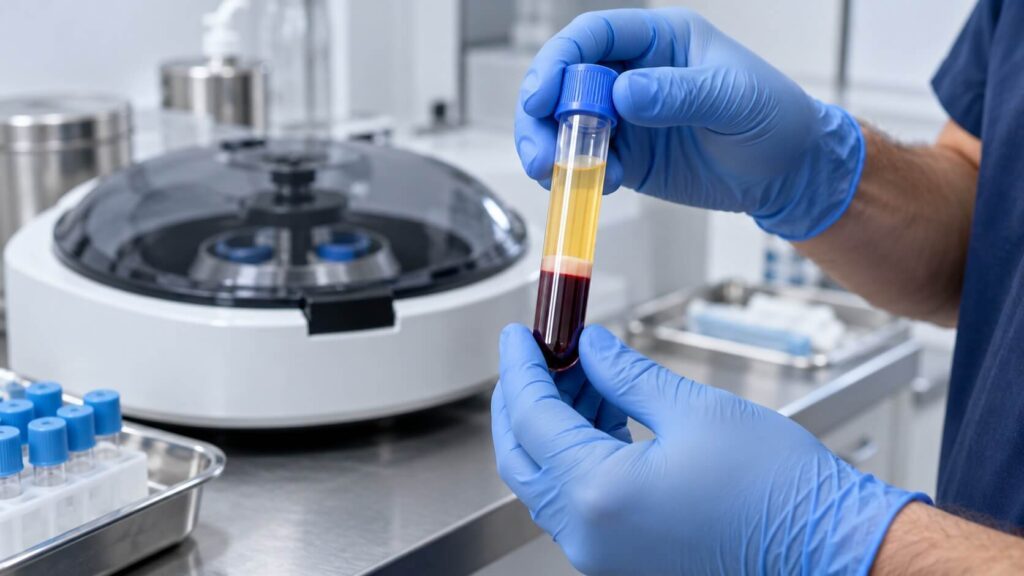
Platelet-rich plasma, or PRP, is prepared from a sample of your own blood. Processing separates a platelet-rich portion, which is then used for injection.
Platelets contain growth factors involved in normal repair processes. Researchers are investigating whether delivering these substances into penile tissue could affect mechanisms relevant to erections.
However, involvement in healing elsewhere in the body does not establish effectiveness for erectile dysfunction.
Penile PRP for ED is different from HA filler, which adds external volume for girth enhancement. It is also different from an injection prescribed to produce an erection for a particular sexual encounter.
What Is Treatment Intended to Improve?
The intended goal is improved erectile function. For an individual patient, that might mean achieving better firmness, maintaining an erection longer or having more satisfactory sexual activity.
These goals should be defined before treatment, rather than relying on a general promise of “rejuvenation.”
Penile PRP for ED has not been established as a reliable method of increasing penile size, restoring every type of sensation or permanently curing erection problems.
A consultation should separate what the patient hopes to achieve from what research can currently support. The more specific the goal, the easier it is to assess whether any subsequent change is meaningful.
What Does the Research Actually Show?
The evidence remains uncertain. Differences in preparation methods, injection schedules, patient selection and outcome measures make studies difficult to compare.
Importantly, improvement after treatment does not necessarily prove that PRP caused it.
A randomised, double-blind, placebo-controlled trial examined two PRP injections in men with mild-to-moderate ED. Both groups improved on some measurements, but the study found no significant difference in effectiveness between PRP and placebo.
That finding matters when considering penile PRP for ED. Testimonials and before-and-after questionnaire scores cannot replace a fair comparison with a control group.
Other research has reported encouraging findings, but the overall evidence does not support predicting a dependable benefit for every patient.
What Do International Guidelines Say?
The European Association of Urology’s guidance on ED states that PRP injections should be used only in a clinical-trial setting because further research is needed.
The American Urological Association’s ED guideline likewise considers PRP experimental and limits its use to approved research protocols.
These positions should be part of informed consent. A treatment being available commercially does not make it an established standard of care.
Before purchasing penile PRP for ED, ask whether it is being offered within an approved research framework and how the clinic explains the difference between its service and guideline recommendations.
What Would a Meaningful Result Look Like?
A useful result needs to matter in your actual sexual life.
Better Firmness
You may be hoping for an erection that is more consistently firm enough for penetration. That is different from noticing a small change that does not improve function.
Better Maintenance
Some men can initially achieve an erection but struggle to maintain it. Discuss whether this is your main problem and how it will be assessed.
Greater Satisfaction
Comfort, confidence and partner communication also influence satisfaction. A questionnaire improvement does not necessarily mean every concern has resolved.
For penile PRP for ED, success should be assessed against agreed goals without assuming that any positive change proves the treatment worked.
Can You Stop Viagra or Cialis Afterwards?
You should not assume so.
There is no dependable evidence that PRP will allow every patient to stop prescribed ED medication. Some research involves men who continue other treatment, which complicates interpretation.
Do not stop or adjust medicines without discussing the plan with your clinician.
If you experience improvement while using tablets, the relevant question is whether sexual function has become more satisfactory under comparable conditions.
When discussing penile PRP for ED, establish whether the proposed goal is improvement with existing medication, improvement without it or simply assessment within a research protocol. These are different outcomes.
How Soon Could Changes Appear?
There is no universally established timeline that guarantees when a patient will notice benefit.
Research follows patients over weeks or months, but a follow-up schedule is not a promise that improvement will occur within that period.
Early changes can also reflect confidence, expectations, other treatments or normal variation in erections.
Before penile PRP for ED, agree on when progress will be reviewed and what information to record. Avoid judging treatment from one sexual encounter.
The duration of any benefit and the value of repeat or maintenance injections also remain uncertain. Further sessions should not be treated as automatically necessary.
Why the Cause of ED Matters
ED can involve blood-vessel problems, nerve injury, medicines, psychological factors or several contributors together.
The severity and duration of symptoms also affect the discussion. Evidence from a study of mild-to-moderate ED cannot simply be applied to severe symptoms or every post-surgical patient.
A consultation should review previous treatment, medical history and the circumstances in which erection difficulties occur.
Penile PRP for ED should not become a shortcut around diagnosing the problem. Unexplained or worsening symptoms deserve assessment, including consideration of broader cardiovascular and metabolic health where appropriate.
The diagnosis helps determine which established options may offer a more predictable benefit.
What Are the Risks?
Using your own blood does not make the procedure risk-free.
Blood collection and penile injections can cause discomfort, bruising, bleeding or swelling. Infection and injury are possible with injection procedures, and existing health conditions may affect suitability.
Other materials used during preparation or treatment, including local anaesthetics, may also cause reactions. “No allergy risk” is therefore too broad a reassurance.
Discuss medicines that affect bleeding, platelet or blood disorders, active infection and previous reactions. Do not stop prescribed medication yourself.
Research safety findings are also limited by study size and follow-up. Small trials cannot reliably exclude uncommon complications.
Should PRP Be Combined With Other Treatments?
Combination treatment needs its own justification.
If PRP, medication and shockwave are started together, subsequent improvement cannot easily be attributed to one component. A package does not establish that every included treatment is necessary or that their combination is superior.
Ask what evidence supports the proposed combination, how much each component costs and whether an established treatment could be tried first.
HE Clinic offers focused shockwave therapy in Bangkok, which has a different procedure and evidence base. It also has limitations and requires appropriate patient selection.
A comparison should explain those differences rather than presenting all options as interchangeable.
What Can You Discuss at HE Clinic Bangkok?
HE Clinic’s HE-Shot PRP service describes blood collection, processing and doctor-performed injections. A consultation should clarify the proposed preparation, schedule, risks, cost and experimental status.
Bring details of medicines, previous ED treatment and your response. Explain the outcome that would make a difference to you.
For penile PRP for ED, the assessment should also cover established alternatives. Depending on suitability, these can include oral medication, vacuum erection devices, prescribed erection injections or specialist referral for other treatment.
You should leave understanding the options, including the choice not to proceed with PRP.
Book an ED Assessment Before Choosing Treatment
Book a confidential consultation at HE Clinic Bangkok to discuss your erection difficulties, treatment history and realistic goals. Ask directly about evidence, research oversight and alternatives before purchasing a procedure.
Penile PRP for ED remains experimental, with uncertain effectiveness and no guaranteed improvement. HE Clinic’s consultation gives you a setting to discuss the service alongside established options, understand what is—and is not—known, and choose a next step based on your individual needs.


